
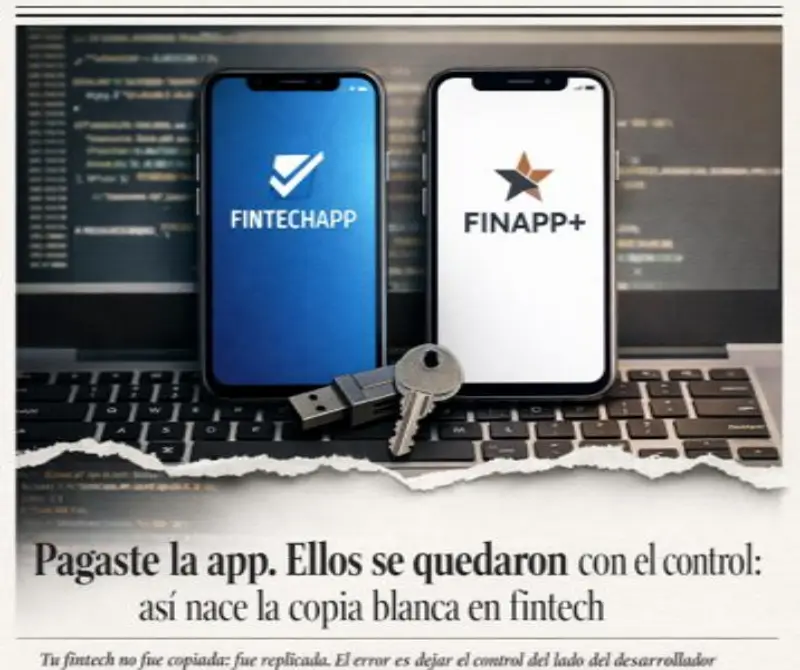
En el sector fintech dominicano hay una escena que se repite con una precisión incómoda y pasmosa. Un empresario, con amplio liderazgo y visibilidad real dentro del ecosistema Fintech y de factoring en Rep. Dominicana y el caribe, recientemente me la describió así, sin dramatismo porque ya la ha visto demasiadas veces:
"Mira Carlos, pagamos el desarrollo completo. Sacamos nuestra app funcional. Y a las pocas semanas aparece una app demasiado parecida... pero con otro logo."
Lo más inquietante es que, casi siempre, no empieza con mala fe. Empieza con una decisión operativa que parece "práctica" y termina siendo letal: Dejar el control donde no debe estar.
A veces el desarrollador es externo (tercero programador, consultora, empresa de desarrollo aplicativos). Otras veces es interno (empleado en nómina). Cambia el contrato; no cambia el riesgo. Si una persona, o una empresa de terceros, controla repositorio, nube, llaves y despliegues, la fintech puede haber pagado todo y aun así operar como invitada en su propio producto.
Y en software, pagar no es lo mismo que poseer.
La Parte que Nadie Factura: El Aprendizaje que se Vuelve Ventaja Competitiva
Una fintech no compra "código". Compra interacción. Compra decisiones operativas refinadas por iteración. Compra el onboarding funnel real (dónde se cae la gente de verdad). Compra el orden exacto de validaciones KYC y las excepciones que solo aparecen cuando el tráfico y los casos raros llegan. Compra thresholds antifraude afinados por cohortes. Compra idempotencia y reversos que evitan dobles cargos. Compra conciliación que no se rompe cuando el upstream falla. Compra el cómo de integraciones sensibles (pasarela, core, KYC/AML, webhooks).
Compra playbooks: Qué se mira primero cuando hay incidentes, qué se apaga, qué se limita, qué se deja respirar. Ese músculo, tu forma de operar, es lo que más valor tiene. Y por eso es lo primero que aparece "milagrosamente" en otra app con cambios meramente cosméticos o de UI.
La Segunda Escena, la que Duele Más
No es cuando sospechas. Es cuando te lo confirman.
Suele llegar como enlace en un chat. Un "mira esto" de alguien del sector. Un inversionista preguntando por qué dos productos "se sienten iguales". O una demo donde alguien, sin querer, navega el mismo flujo con el mismo orden de validaciones, las mismas pantallas clave, las mismas reglas.
No ves una copia burda. Ves una réplica funcionalmente equivalente, con otro logo. Eso es copia blanca.
Lo que realmente desgarra es entender que usted no solo pagó por el éxito (app funcional), sino que financió cada fracaso previo hasta llegar a él: usted pagó las horas de depuración de errores que se cometieron, subsidió las iteraciones fallidas que hoy son flujos perfectos y costeó la curva de aprendizaje que ahora le permite a ese desarrollador entregarle a un tercero una solución madura a una fracción del costo y del tiempo. Ver esa "copia blanca" en un chat de WhatsApp o en un link de correo, es la confirmación de que usted fue, sin saberlo, el patrocinador de la maestría técnica de su competencia; usted puso el capital para descubrir qué servía y qué no, permitiendo que otro se salte el calvario de la experimentación para empezar directamente desde la meta que a usted le costó tiempo y miles o millones de dólares.
República Dominicana: La Ley 65-00 Te Protege, pero Exige que Tú Te Comportes como Dueño
En República Dominicana, el programa de ordenador está dentro de las obras protegidas por derecho de autor, y la propia Ley 65-00 incluye expresamente a los "programas de ordenador" y también a la "documentación técnica y los manuales de uso" vinculados al software.
Ahora, aquí viene la parte que la mayoría aprende tarde: El derecho de autor no te premia por haber pagado; te premia por haber dejado huella jurídica y operativa de tu propiedad.
Dos disposiciones de la Ley 65-00 suelen ser el punto de quiebre para fintechs:
El "productor" del programa
El artículo 73 define al productor como quien toma la iniciativa y la responsabilidad de la realización; presume productor a quien aparezca indicado "en la forma usual"; y, salvo estipulación en contrario, presume cedidos al productor los derechos patrimoniales exclusivos, incluyendo adaptaciones o versiones.
Traducción operativa: Si el repositorio vive en la organización del desarrollador, si la nube está a su nombre, si las llaves y despliegues los decide él, si la documentación crítica "vive en su laptop", tú mismo estás construyendo el escenario perfecto para depender... y para litigar desde abajo, y casi siempre tarde.
El derecho de autor protege la expresión, no el método del negocio
La Ley 65-00 excluye de protección las ideas, procedimientos, métodos de operación y conceptos (artículo 7).
Esa frase explica el dolor moderno: El clon "no es igual", pero se siente igual, porque replica lógica y flujo aunque reescriba el código y cambie la UI.
El Error que Quema Igual en los Dos Mundos: Desarrollador Externo y Desarrollador Empleado
Aquí es donde mucha gente se equivoca por exceso de confianza.
Desarrollador externo
El patrón típico es simple: El repo es "del desarrollador", el cloud billing es "del desarrollador", el pipeline lo toca "el desarrollador", y la documentación "está pendiente". Resultado: Tú no puedes auditar, migrar ni operar sin permiso. Y desde ahí, convertir tu proyecto en plantilla es demasiado fácil: Un ajuste de branding, dos cambios cosméticos, y sale una "nueva" fintech.
Desarrollador empleado
La trampa es psicológica: "Como está en nómina, todo es mío". El derecho puede ayudar, pero el negocio se rompe por accesos. Si el empleado trabaja con cuentas personales (Git personal, Drive personal, Apple ID personal, cuentas cloud "rápidas"), o si no hay una política corporativa clara de cuentas y un offboarding serio, recuperar activos digitales se convierte en una pesadilla probatoria y operativa.
Y aquí está la verdad incómoda: La copia blanca moderna no se ejecuta primero con abogados; se ejecuta con accesos.
Donde Caé el Clon Inteligente: Secreto Empresarial y Competencia Desleal
Cuando la copia blanca no es copy/paste literal, lo que se recicla suele ser lo que tú jamás publicarías: Umbrales, scoring, reglas y excepciones, parametrizaciones, mappings, patrones de fraude, configuraciones, arquitectura de seguridad, decisiones finas de riesgo, procedimientos operativos.
Ahí entra la Ley 20-00. Su artículo 178 define el secreto empresarial como información secreta (no generalmente conocida ni fácilmente accesible) con valor comercial por ser secreta, respecto de la cual se hayan adoptado medidas razonables para mantenerla así. Y el artículo 179 tipifica como competencia desleal, entre otras conductas, explotar o divulgar sin autorización un secreto empresarial al que se tuvo acceso bajo obligación de reserva derivada de relación contractual o laboral.
En fintech, "medidas razonables" no es poesía. Es evidencia.
Si tus reglas viven en un documento personal, si los secretos viajan por chat, si el cloud no está a nombre de la empresa, si hay un solo admin, si no hay segregación de accesos, tú no solo tienes un riesgo técnico: Debilitas tu posición jurídica el día que aparezca el clon.
La jugada real del clon no empieza en el código. Empieza en el acceso.
Cinco Candados Contractuales Anticopia Blanca que Sí Te Sostienen en Juicio
Aquí es donde se separa una fintech que se queja de una fintech que cobra. No son cláusulas para "verse bonitas". Son cláusulas, utilizadas en mercados con gran desarrollo como el Estadounidense, para que, si aparece "la app con otro logo", la discusión sea corta, verificable y cara para el clonador.
Primer candado: Productor inequívoco, pero con huella operativa
Debe quedar declarado que la fintech toma la iniciativa y la responsabilidad del proyecto, y por tanto actúa como productor del programa bajo el artículo 73 de la Ley 65-00. Y luego viene lo que verdaderamente gana: Que la fintech aparezca como productor "en la forma usual" (repositorio corporativo, documentación bajo marca corporativa, entregables con identificación de la empresa, control corporativo de despliegues).
Segundo candado: Cesión patrimonial total y derecho a transformar, sin ambigüedades
En fintech, "se entrega el software" no significa nada si mañana alguien intenta la salida elegante: "Esa es otra versión". La cesión o atribución patrimonial debe cubrir explotación y, sobre todo, modificación, adaptación, versiones y derivados.
Tercer candado: Prohibición de reutilización y reempaquetado para terceros
El contrato debe prohibir expresamente reutilizar, reempaquetar, licenciar, revender o poner a disposición de terceros el producto, módulos, componentes o entregables creados para la fintech, salvo autorización escrita. Este candado convierte la defensa típica ("no copié tu código") en insuficiente: Aquí el pleito no vive de copiar; vive de explotar para un tercero lo que era para tu exclusiva.
Cuarto candado: Anti-equivalente funcional, diseñado para matar el "no es igual"
Define "equivalente funcional" como cualquier solución que reproduzca sustancialmente flujos, secuencias, validaciones, reglas, excepciones, lógica de riesgo, integraciones y parametrizaciones desarrolladas o afinadas en el proyecto, aunque cambie UI/branding o se reescriba el código.
¿Por qué esto es crucial en RD? Porque, como regla general, la Ley 65-00 excluye de protección las ideas, procedimientos, métodos de operación y conceptos (artículo 7). Si no lo amarras por contrato, el infractor te discutirá que lo replicado era "método" y no "expresión".
Quinto candado: Secreto empresarial operable, no de papel
Identifica en el contrato (y en el marco laboral, si aplica) qué es información sensible: Thresholds, scoring, reglas antifraude, triggers AML, configuraciones, mappings, runbooks, arquitectura de seguridad, data dictionaries y learnings operativos. Luego impone doble obligación: No divulgar y no usar fuera del proyecto. Y, sobre todo, obliga medidas razonables verificables, porque sin eso el secreto se vuelve discurso: Control de accesos por rol, segregación de ambientes, gestión formal de secretos, trazabilidad de cambios críticos y un plan de salida (offboarding) con entrega de activos y revocación de accesos.
ONDA y ONAPI: Cada Una en su Carril, para Reforzar tu Posición
ONDA se relaciona con derecho de autor y ofrece registro de obras, útil como soporte probatorio. La ley ya coloca el software y su documentación dentro de lo protegible; el registro no sustituye control ni contrato, pero ayuda a fijar existencia y autoría.
ONAPI es tu carril de propiedad industrial. Muchas copias blancas cambian el logo precisamente para evitar fricción marcaria. Por eso, la defensa robusta casi nunca es "una sola cosa": Se sostiene en contrato, control, derecho de autor (Ley 65-00) y secreto empresarial/competencia desleal (Ley 20-00).
Conclusiones
La copia blanca no es un accidente. Es un síntoma.
Ocurre cuando una fintech confunde financiar con poseer. En software, el activo no es la app: es el control de la app. Y ese control no vive en una factura; vive en la arquitectura legal y operativa que protege lo que pagaste: titularidad patrimonial, repositorio, nube, llaves, despliegues, documentación crítica y disciplina real de confidencialidad. Si estás en fintech y todavía no has revisado cómo está amarrada esa capa, tanto con desarrolladores externos como con empleados, es probable que un día veas tu producto... con otro logo.