
Subsoil resources: uncollected revenue for some, accumulated contingencies for others
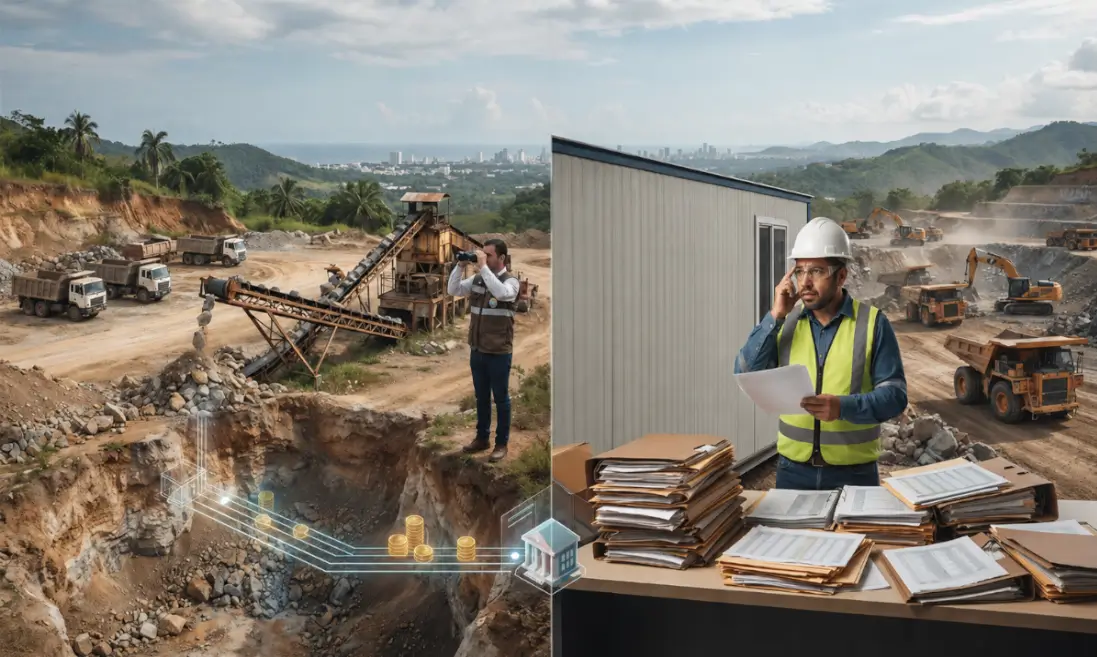
We have had the opportunity to represent a municipality in Greater Santo Domingo in several successful proceedings related to subsoil resource extraction, working on the determination, claim and regularization of outstanding obligations.
The experience in these proceedings reveals a problem that may recur in other municipalities: there are legitimate sources of revenue recognized by law that can remain for years without being properly identified, audited or collected. Mining and quarries are a good example.
I Applicable legal framework
What the law says
- Law 64-00, art. 117, paragraph II: when dealing with non-renewable natural resources, the municipality where the operation is located will receive 5% of the net benefits generated.
- Determining it requires reviewing existing operations, the periods involved, the available economic information, the payments made and the differences that may remain outstanding.
Enforcement tools
- Law 176-07, art. 275: establishes collaboration between the National Tax Administration and city councils regarding management, assessment, inspection and collection.
- It includes the exchange of tax information and coordinated actions.
- Art. 276: allows the application of surcharges and interest for late payment and default.
II Economic impact
For local governments
- A proper review may reveal historical claims and revenue that is not being fully collected.
- The Dominican legal system contains various sources of municipal revenue that are not always fully utilized.
For mining companies
- Unidentified, incorrectly determined or insufficiently documented obligations can become significant economic contingencies.
- The matter goes beyond the mining sector; it applies to quarries and other subsoil resource operators.
III Key questions
Before creating new local taxes, a municipal administration should ask itself:
For the municipality
- What revenue does the law already recognize in favor of the municipality?
- Is it being correctly determined and collected?
- Are there outstanding historical claims?
For the business sector
- Do we have our obligations to the municipality correctly identified, quantified and documented?
For some there may be uncollected revenue. For others, unidentified contingencies. Reviewing it in time is usually considerably less costly than discovering it several years later.
+ Sources
- Law No. 64-00, General Law on Environment and Natural Resources, art. 117, paragraph II.
- Law No. 176-07, on the National District and the Municipalities, arts. 275 and 276.
+ Legal note
This material is for general informational purposes only and does not constitute legal, tax or financial advice regarding any particular situation. Conclusions depend on the specific facts of each case.
Carlos Romero Polanco
If your municipality or company operates subsoil resources, request a review of the determined and outstanding obligations.
cromero@legalhubrd.com · LegalHub RD · Santo Domingo, Dominican Republic