
The New Criminal Code Can Turn a Construction or Physical Safety Failure into a Criminal Investigation
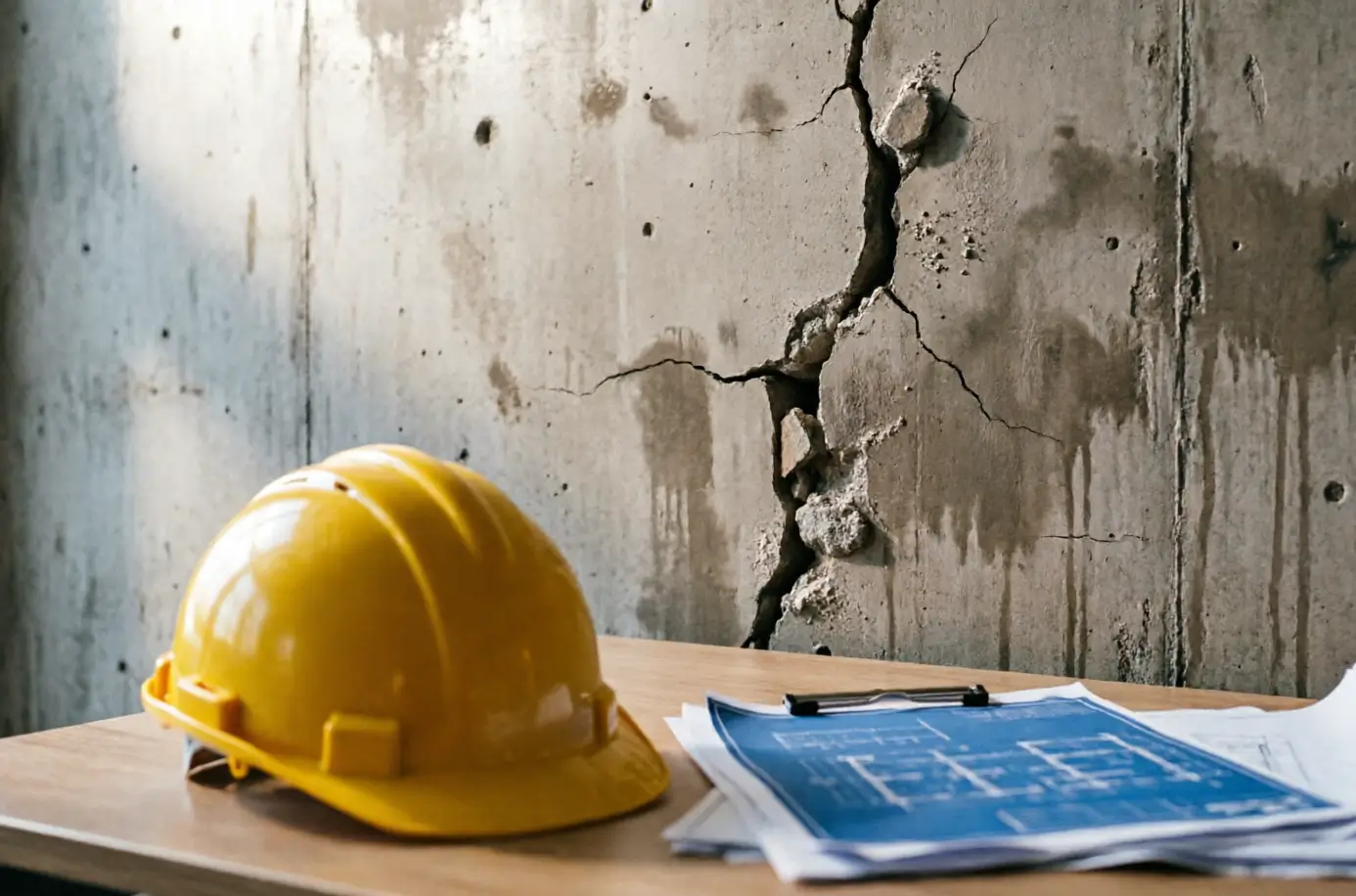
1 The accident happens in seconds. The evidence is built over months.
A material accepted without real certification. A crack reported and not escalated. An incomplete logbook. A contractor chosen by price, not by technical capacity. A change order signed without technical backing. A report warning of structural failures that someone received and no one elevated.
Starting August 2026, with the entry into force of the new Dominican Criminal Code, Law No. 74-25 does three things at once.
A disaster occurs in an instant. Responsibility begins earlier: when a warning is minimized, when materials of questionable quality are chosen, when a repair is postponed, or when a technical report does not reach those who should decide, and yet the operation continues, the work progresses, or the establishment remains open as if the risk did not exist.
2 The context: Jet Set and the new criminal reality
After the Jet Set case, the Dominican Republic no longer looks at construction, maintenance, and physical safety failures the same way. The roof collapse of a nightclub, with 236 fatalities, turned a technical discussion into a national criminal discussion. Without prejudging responsibilities, its owners were sent to trial for involuntary manslaughter. Jet Set proved that criminal risk already existed. Law 74-25 changes the scope of the question: not just who acted negligently, but where the company's controls were.
The trend is not only local. In Hong Kong, the Wang Fuk Court fire left 168 dead and generated charges against individuals and companies for negligence, use of deficient materials, non-fireproof mesh, flammable panels, and poor supervision. In Bangkok, after the collapse of a tower under construction, a senior construction executive surrendered alongside designers, engineers, and supervisors accused of criminal negligence. The investigation did not stop at the worksite. It went up the chain.
3 The three things Law 74-25 does
3.1 Owner liability (Art. 112, paragraph II)
The first affects the owner directly. Article 112, paragraph II, provides for imprisonment for the owner, possessor, or person with control over a property or facility intended for commerce, shows, parking, lodging, meetings, conventions, or other public, private, or commercial activity, when failure to comply with repair, construction, physical safety, or expansion authorization obligations results in a death. The penalty scales with the number of victims.
However, the investigation need not stop at the owner. The builder, main contractor, subcontractors, supervisors, or technical managers may come under scrutiny through a different route: their own action or omission, their legal or contractual duties, the quality of what they executed or certified, and the controls they were obligated to apply.
3.2 Corporate criminal liability (Art. 114)
The second affects the company involved in the risk. Article 114 allows declaring a legal entity criminally liable for clumsiness, recklessness, inadvertence, or negligence, under the conditions of Articles 8 to 11. This may include, as the case may be, the owning or operating company, but also the builder, main contractor, subcontractor, supervisor, or technical consultant, when the act results from actions or omissions attributable to its bodies, representatives, or subordinates and from failures of direction, control, or supervision.
Sanctions may include fines, temporary or permanent closure of establishments, debarment from bidding with the State, revocation of licenses, permits, or concessions, and even legal dissolution.
3.3 The value of a real compliance program (Art. 8)
The third is the most important for anyone who wants to arrive at an investigation with a documented defense. If the risk arises in a work, property, or facility intended to receive people, clients, patients, guests, users, workers, or the general public, the compliance program cannot be generic. It must be designed around those specific risks.
This includes real estate developments, residential towers, hotels, clinics, shopping malls, parking lots, event centers, warehouses, industrial plants, energy facilities, road works, ports, airports, concessions, public infrastructure operated or executed by private parties, and any facility whose failure may affect human lives or operational continuity.
Article 8 allows excluding the legal entity from criminal liability when the company demonstrates, objectively, that before the act it had adopted and implemented a compliance program suited to its activity; that the program was circumvented through fraudulent maneuvers that prevented its detection; and that, upon becoming aware of the risk or the act, management acted in accordance with the law and reported it to the competent authority.
The Code does not protect paper compliance. It demands real controls.
4 What should a real prevention program contain?
For a builder, main contractor, subcontractor, supervisor, developer, hotel, clinic, concessionaire, shopping mall, parking lot, industrial plant, or private operator of public-use infrastructure, a real program must allow demonstrating control over the risks that can actually cause a tragedy: critical materials, contractors and subcontractors, maintenance, physical safety, permits, expansions, inspections, logbooks, change orders, technical reports, and alerts that should have reached those who had to decide.
The prevention program must contain, at a minimum:
- Express identification of criminal risks specific to the activity;
- A body or department with autonomous control and supervision powers;
- An action protocol for risk detection, with a disciplinary system;
- Periodic review of the model when the organization, work, operation, or its risks change.
For small and medium-sized enterprises, the management body may assume that function. Partial implementation may lead to mitigation, but does not constitute a complete defense.
5 Conclusion
Without a real program, the company's defense is weak from the first request. With a timely, verifiable program adapted to its role in the work, property, or operation, the company can aspire to exclusion, mitigation, or a much stronger procedural position. The difference is not in the corporate narrative. It lies in being able to demonstrate, with documents, that the company directed, controlled, and supervised what was under its responsibility before the incident.
If it happens tomorrow, what file can I put on the table? If the answer is not clear, the risk already exists. And August is too close to improvise.
At LegalHub RD, we design and implement criminal compliance programs tailored to the risk of each operation: risk identification by activity, control body, verifiable protocols, and documentation mechanisms that withstand an investigation.
For owners, builders, developers, operators, concessionaires, and boards of directors, the question is no longer whether it is advisable to prepare. The question is what documents and risk mitigation programs they will be able to present if, after August 2026, a failure results in deaths, injuries, criminal investigation, and control review.
After the incident, prevention is no longer reviewed. Responsibility is reconstructed.